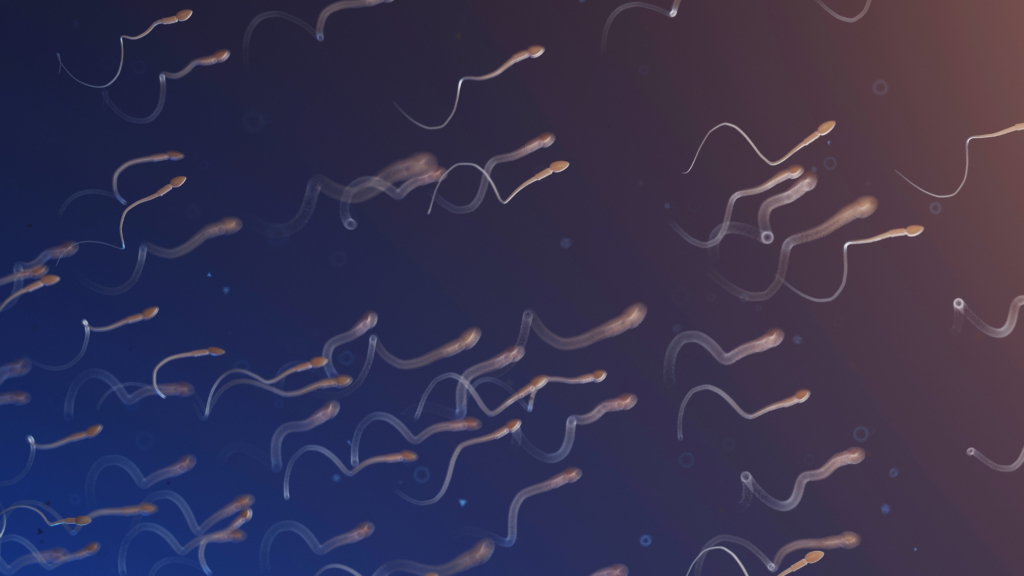

Romantic holidays, outdoor concerts, heat exhaustion – and now apparently optimal sperm quality. Summer really has it all.
A new study published in the journal Reproductive biology and endocrinology found that human sperm quality follows a seasonal pattern, peaking in June and July and bottoming out in December and January. Researchers analyzed sperm samples from more than 15,500 men between the ages of 18 and 45 who applied to become sperm donors between 2018 and 2024, with samples collected in four Danish cities and in Orlando, Florida.
What they specifically measured was “progressive motility”—essentially, how well sperm swim in a straight line. The summer months consistently won across both populations.
Study co-author Allan Pacey, professor of andrology at the University of Manchester, said Live Science the results made him wonder if aspiring sperm donors might have better chances of acceptance if they applied in the warmer months. “By extension,” he said, “it could also mean that couples in Denmark and Florida who want to try for a baby might do better in the summer. But that’s just a theory.”
This is the strangely exact time when your sperm quality peaks
Before anyone starts rearranging their conception calendar, it’s worth hearing from Dr. Sherman Silber, a urologist and director of The Silber Infertility Center in St. Louis, who was not involved in the investigation. He told Live Science the seasonal differences are “very, very small” and “make no difference at all biologically.” So temper your expectations accordingly.
What is really interesting here is that temperature alone does not explain the trend. Because sperm take about 74 days to develop, the researchers investigated whether ambient temperatures in the weeks before ejaculation had any effect. They did not find a meaningful connection. Pacey said lifestyle factors likely do much of the work. “This could include diet, exercise, exposure to sunlight,” he said. “But we didn’t measure these things, so we can only speculate.”
Silber offered another theory: evolutionary baggage. In many animals, reproduction is timed so that offspring arrive in the spring when survival conditions are better. A summer sperm spike would support this timing.
The data also revealed a few other notable findings. Sperm motility was highest in men in their 30s and declined in men under 25 and over 40. In Denmark, quality dropped noticeably between 2019 and 2022, which the researchers attributed to lifestyle disruptions from the pandemic, before returning in 2023. Meanwhile, a steady improvement from Orlando saw a steady improvement from 20248. explain yet.
Science, as always, answers one question and creates about six more.