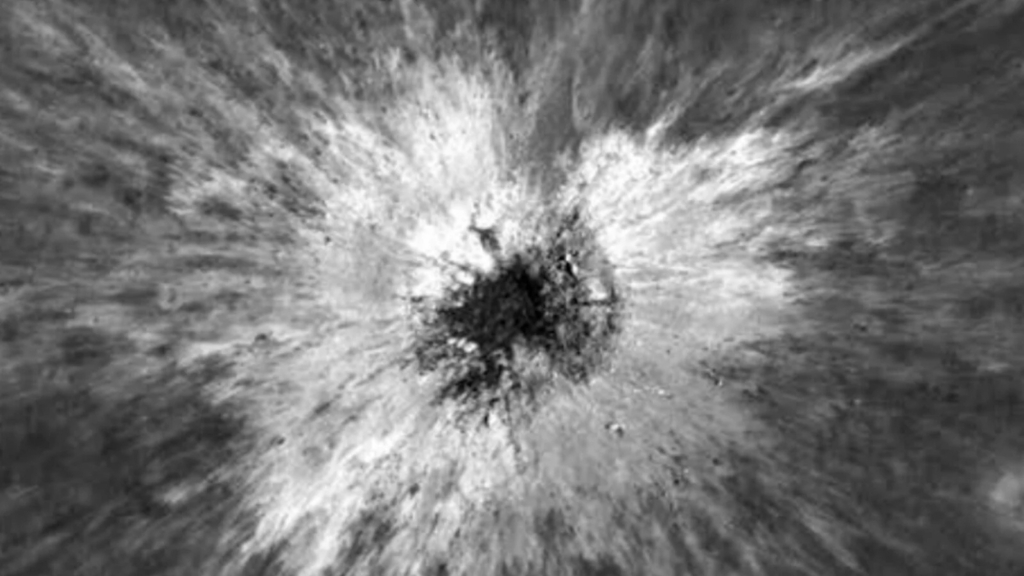

Sometime in the late spring of 2024, something crashed into the moon. It is not a particularly rare phenomenon. It happens more often than you think, and it looks far less spectacular than those AI slop videos on your iPhone. However, this particular impact was discovered by NASA’s Lunar Reconnaissance Orbiter. Even better, that caught some before-and-after pictures of the impact area.
What they found was a very remarkable, very fresh crater about 738 feet wide and 141 feet deep, a full three times the size of the previous largest impact crater ever observed by the Lunar Reconnaissance Orbiter since it launched in 2009.


The moon has a new crater, and NASA has the before and after photos to prove it
While lunar impacts occur occasionally, impacts of this scale occur only once every 139 years in a given region of the moon. Cosmically speaking, spotting this one almost immediately after it warmed up was incredible luck.
The crater itself is funnel-shaped and surrounded by debris that was ejected in a pattern that suggests the space rock entered from the south-southwest. Some of the ejected chunks are huge, up to 13 meters across, and shaped like giant shrapnel fragments that would have torn apart any nearby lander were bases, something future lunar colonization missions will have to take into account.
Inside it, the researchers discovered a dark, glassy material that formed when the rock partially melted from the heat generated by the impact and then cooled almost instantly. This detail is especially impressive given that we almost never get to see craters of this size with high-resolution images.
We will certainly never get before-and-after pictures of the impact site that give scientists a clearer understanding of how devastating a meteor impact can really be.