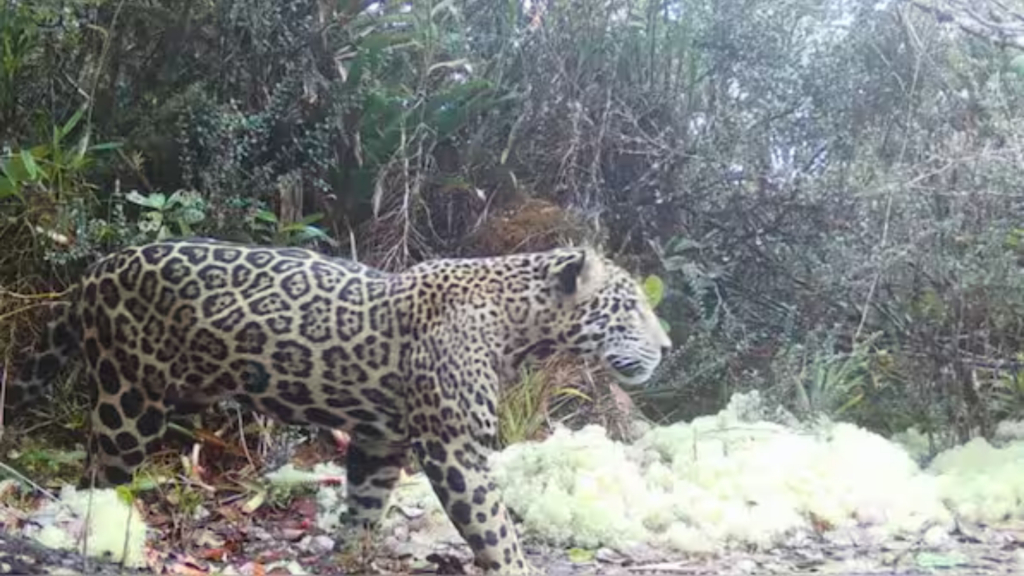

The so-called clouded jaguar has not been seen in Honduras for over a decade. Or rather, it hadn’t been seen in over a decade. A camera trap set up during the hunt in the Sierra del Merendón recently captured a brief glimpse of the clouded jaguar at high altitude.
This sight of a young man strolling through the woods at more than 2,000 meters above sea level represents a major victory for conservationists, according to a CNN report.
Thanks to deforestation, poaching, and agricultural production, Jaguars have lost nearly half of their range across the Americas. In Honduras alone, about 19 percent of forest cover disappeared between 2001 and 2024. That kind of destruction is not limited to trees. It destroys ecosystems for countless animals, both large and small. It cuts off their migration routes and disrupts food chains, especially those that these high-altitude jaguars relied on.
Seeing one appear in the Merendón mountain range doesn’t just mean that this one species is on the way back; it means the entire region make a comeback. And it didn’t do it by itself.
Rare ‘Cloud Jaguar’ seen in Honduras for first time in 10 years
The region has been under some form of protection since the late 1980s, but conservation efforts have increased in recent years, including antipoaching patrols, wildlife monitoring systems and teams, and programs that restore animals that were once vital to the region’s food chain, such as deer and peccaries. All of this, paired with the Honduran government’s commitment to aggressively replant degraded lands, combined with its deployment of military units to stop illegal logging operations, has rebuilt an ecosystem that had been nearly destroyed.
The Jaguar isn’t going to last long. Experts who spoke to CNN believe it will move through a wildlife corridor that connects it to other jaguar populations in Guatemala as it searches for a mate. This is precisely why the re-establishment of this habitat was so important. Jaguars, like many big cats, need these vast interconnected territories to survive. Isolated groups risk collapse due to inbreeding and resource depletion. Moving freely between regions is what keeps them alive and thriving.
The same is true of several wild cats that call this area home, including pumas, ocelots, jaguarundis and margays. It is clear that conservation efforts are working as intended; now it’s just a matter of whether these efforts will continue, or if humanity’s uglier, more destructive side will take hold again.