
When you’ve traveled around Southeast Asia long enough, temples start to blur together. I needed something else. So when I came across mentions of a place nicknamed the “Museum of Death” while killing time in Bangkok in 2017, I was in.
I’m into macabre stuff. has always been. Throw in anything related to the biological sciences and I’m obsessed. So this felt like just the off-the-beaten-path excursion I was looking for.
The museum’s real name is the Siriraj Medical Museum, and it is located on the grounds of Bangkok’s oldest hospital, right on the Chao Phraya River. Most tourists never make it to this part of town – it’s tucked away near a cluster of hospitals, off the beaten track. A river ferry takes you there, which is convenient and always an adventure (don’t let the river water splash in your mouth!).
What I didn’t expect was how extensive the museum was. Six separate collections under one roof: pathology, anatomy, parasitology, forensic medicine, Thai medical history and prehistoric anthropology. You could spend hours here and still not see it all.
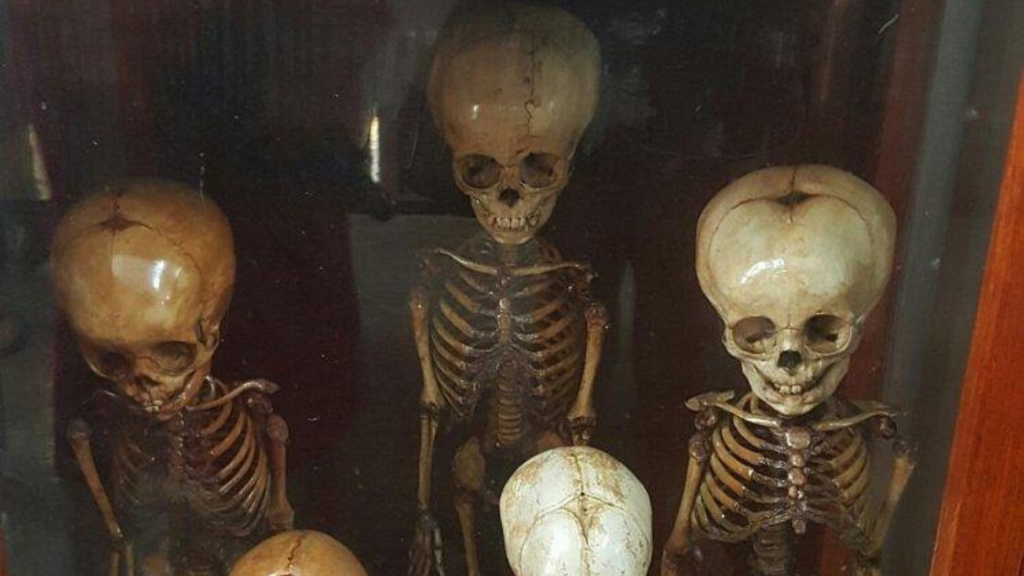
The pathology wing opens with prenatal samples – babies with genetic disorders preserved in formaldehyde. Unsettling for sure, but fascinating at the same time. The parasitology room had a 35 kilo human testicle ravaged by elephantiasis. It’s not something you see every day.
Inside Bangkok’s Most Disturbing Museum (And Why You Should Go)
The anatomy museum was amazing. Two complete human dissections—the full nervous system and the full arterial system—were spread out and preserved in glass. Museum staff claim that no other institution in the world displays anything like it. I personally had never seen every single nerve in the human body up close, so it seems real.
Then there was forensic collection. The exhibition I came for but was not prepared for. Broken skulls from murder victims. A severed arm from a suicide, the slitted wrist still intact. And in the center of the room, encased in a glass case: the mummified body of Si Ouey Sae Urng, executed by firing squad in 1959 following his conviction for the murder and cannibalization of more than 30 children. Thai parents invoked his name for decades to scare disobedient children. As I stood a few feet from his actual mummified body, I just kept thinking – there is absolutely no way this museum could exist in the United States.
That said, the story complicated the story. A subsequent review of the evidence in Si Ouey’s case found no missing organs from any of the victims, timelines that did not add up, and a confession given solely through interpreters – Si Ouey did not speak Thai. Scholars now widely regard him as a scapegoat, a target of intense anti-Chinese sentiment during the trial. In May 2019, the museum changed his designation from “cannibal” to “death row inmate.” In July 2020, after 61 years on display, his remains left the museum for a proper cremation.
If you have even a passing interest in medicine, history or the dark weird – this place is worth every uncomfortable minute.